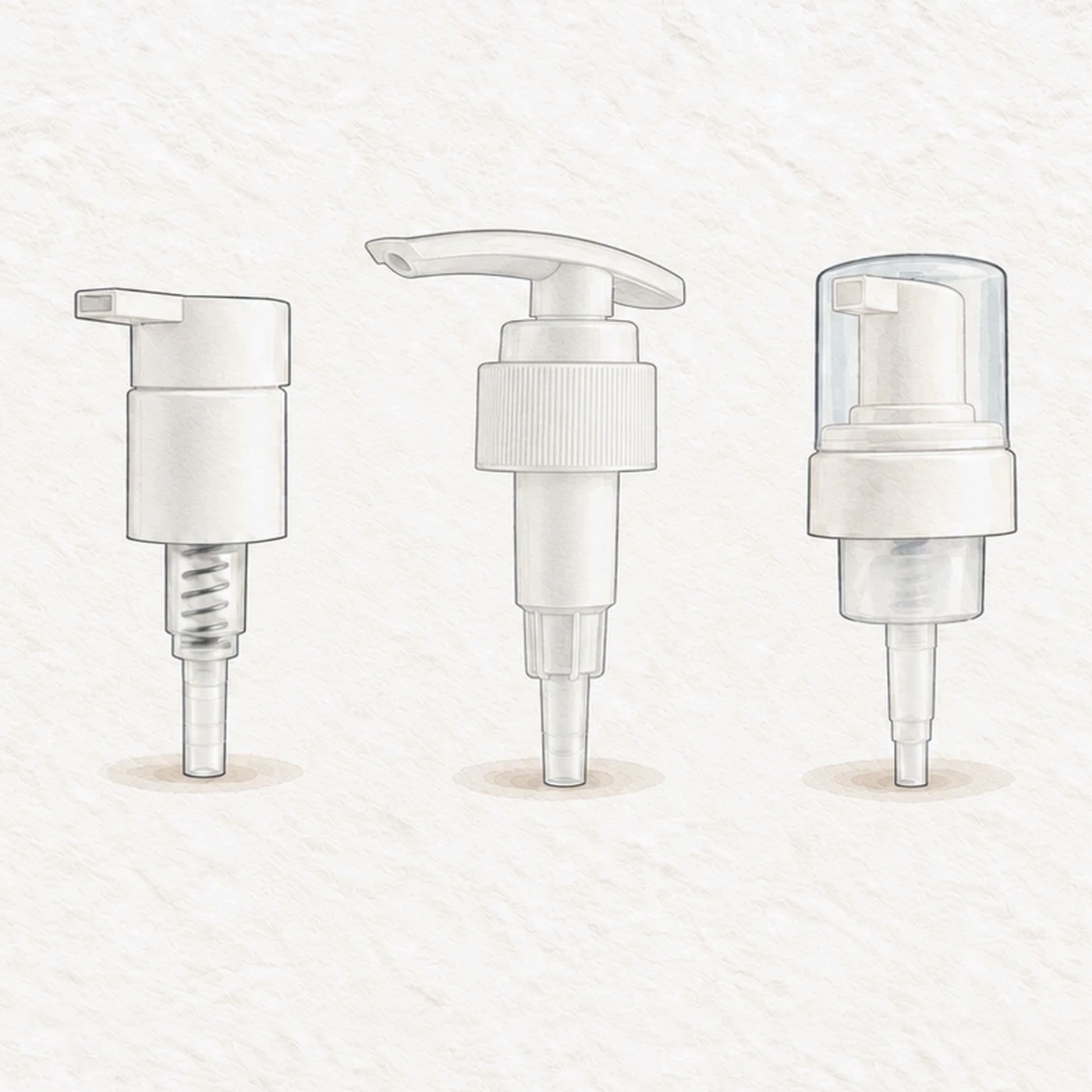
How to Match a Pump with the Right Bottle
Neck size is the first check, but it is not the only compatibility point. Here is what else decides whether a pump actually works on your bottle.
Most pump and bottle problems are discovered on a sample, not on a drawing. The usual reason is that the neck size matched, so everything else was assumed to match too.
Neck size tells you less than it appears to
A 24/410 pump and a 24/410 bottle will thread together. That is all the designation guarantees. The number before the slash is the diameter, the number after it describes the thread finish. Neither says anything about how deep the bottle is, how viscous the formula is, or whether the closure will sit flush.
The four checks that actually decide it
Dip tube length against bottle height. A tube that is too short leaves product at the bottom. Too long, and it bends against the base and restricts flow. This needs the actual bottle height, not the nominal capacity.
Output per stroke against viscosity. A lotion pump moving 2 ml per stroke will struggle with a thick cream and will over-dispense a light serum. Output is a specification you can ask for, and it should be chosen against the formula.
Closure seating. A pump can thread on and still sit visibly crooked, usually because the shoulder geometry of the bottle and the underside of the closure were designed to different assumptions. This is only visible on a physical sample.
Thread engagement and torque. Threads from different sources can strip at higher torque even when the designation matches. If your filling line caps automatically, the torque setting has to be agreed.
What to ask a supplier for
Ask for the pump already fitted to the bottle you intend to use, and ask what was checked before it shipped: leaks, thread, whether it sits straight. That is the part a component supplier can verify.
What a supplier cannot verify is how your formula behaves against the materials over time. Formula compatibility and transport testing stay on your side, because they need your formula. The practical split is straightforward — we send the assembled and fit-checked parts, you run your own formula against them.